Book cover illustrations
In my book cover portfolio, you will find a selection of projects created for independent authors and international publishers. Each design is conceived to reflect the essence of the book and connect with the reader from the very first glance. Through digital illustration, 3D modelling, and composition design, I transform ideas and emotions into images that stand out.
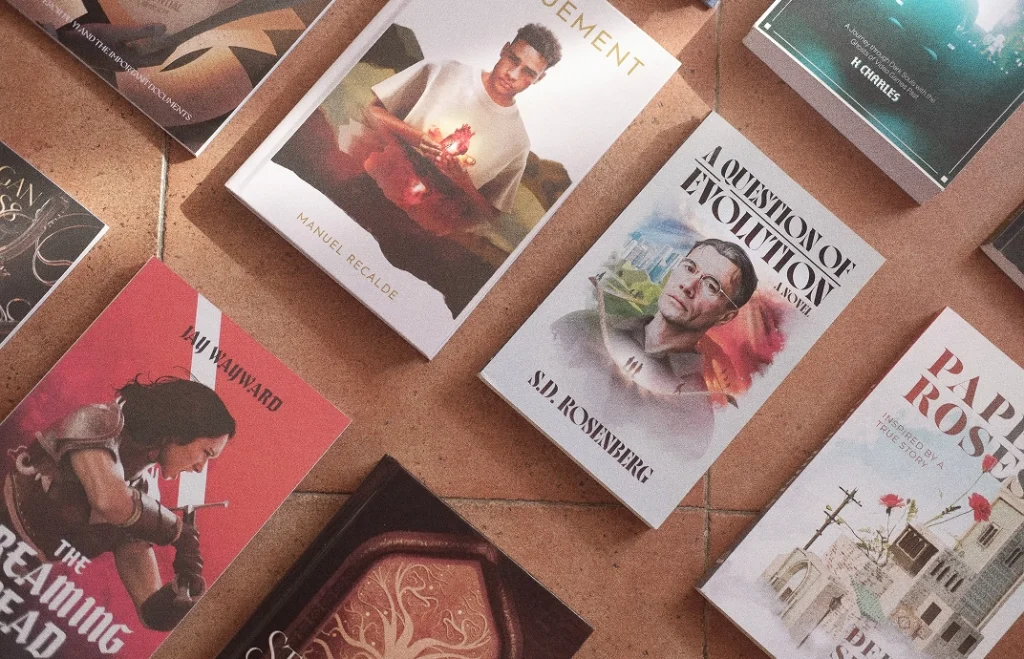
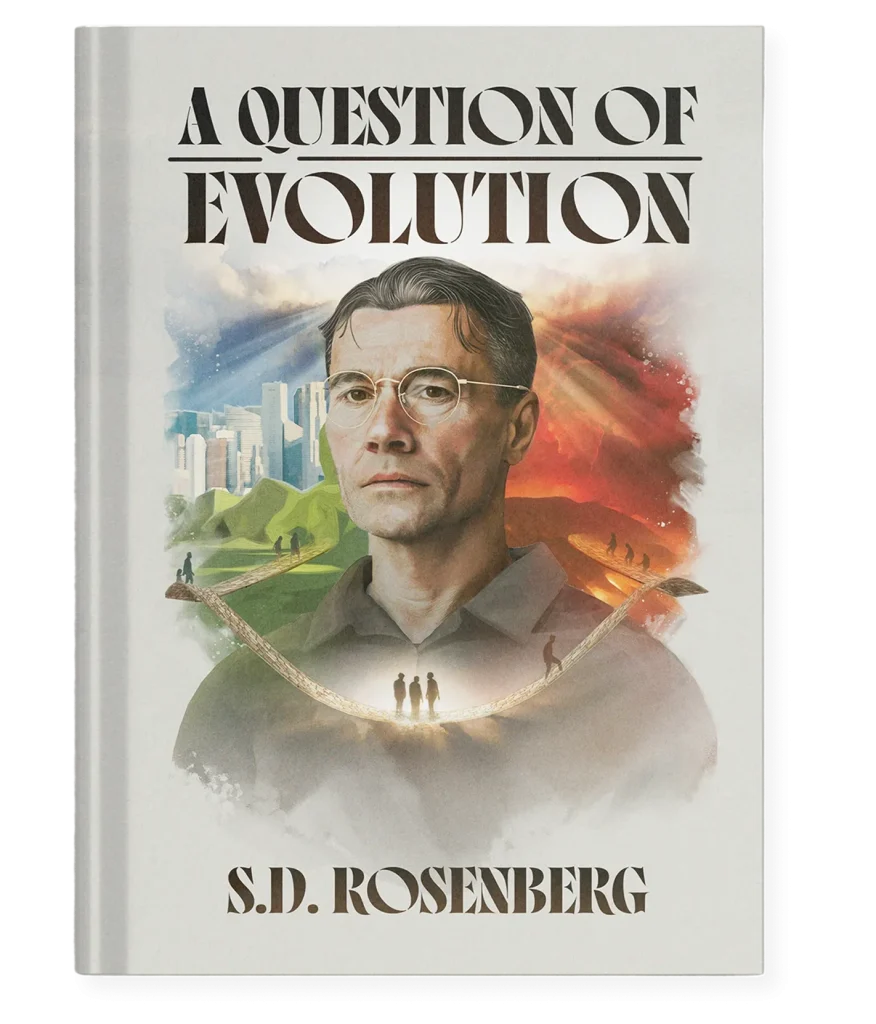
A Question of Evolution
The cover “A Question of Evolution” combines digital illustration and portraiture to show a man in the foreground, serious, wearing glasses and with a thoughtful expression, as if he were a contemporary scientist or thinker. Behind him, the background is divided into two halves: on one side, a modern city with blue, ordered buildings; on the other, a warm landscape of rocks and a red sky reminiscent of primitive scenes. A curved path crosses both areas, and on it walk several human silhouettes of different sizes, evoking evolution and the passage of time.
The palette, ranging from cool blue to intense orange, alongside the layered composition, creates a tension between progress, nature, and ethics. The classic title typography frames the illustration as if it were a poster for an essay or speculative fiction, suggesting a story that questions what we have gained, what we have lost, and where exactly human evolution is leading us.
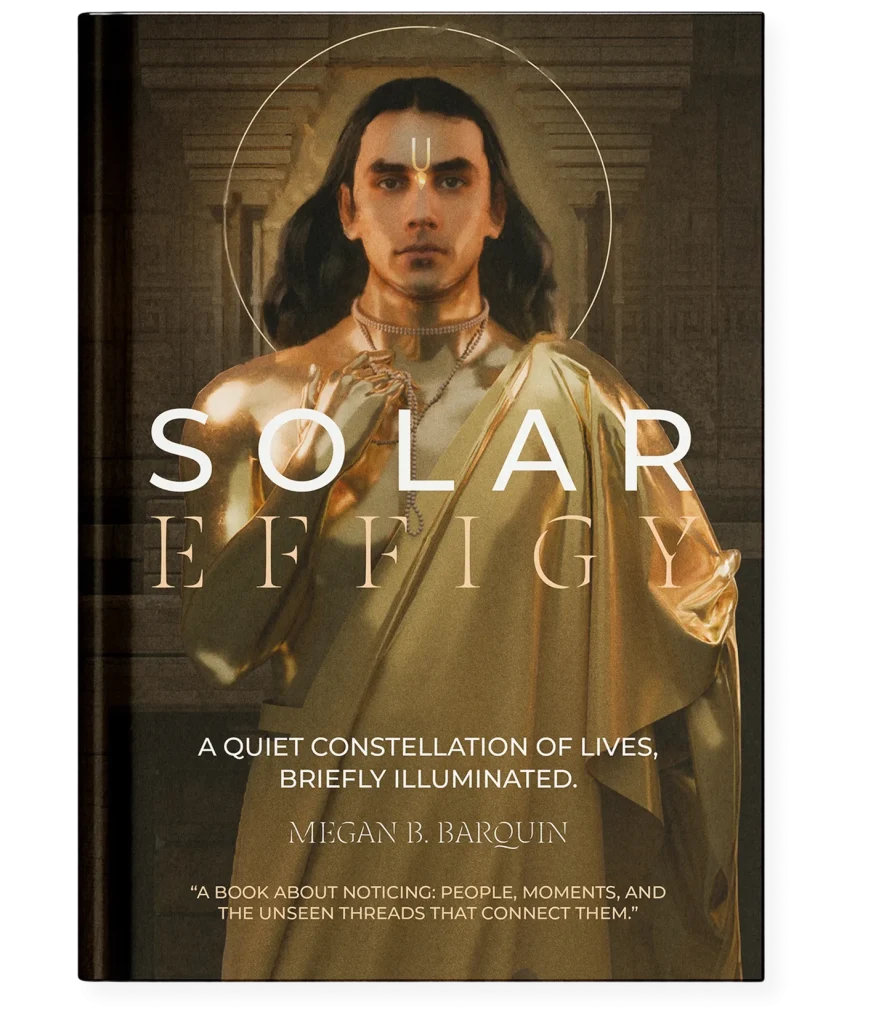
Solar Effigy
The cover for “Solar Effigy” features a digitally illustrated, painterly piece centred on the figure of a character dressed in a golden robe, set within a stone temple or palace. A circular halo of light surrounds their head, reinforcing the idea of a sacred effigy or near-divine figure, while their direct gaze at the viewer blends authority and calmness. Warm light washes over the folds of the metallic fabric, creating reflections reminiscent of sunlight glinting off a sculpture.
The architectural backdrop, with columns and reliefs, situates the scene in a solemn space, while the clear typography of the title integrates over the chest and surroundings, allowing the image to breathe. The whole suggests a work about faith, symbolic power, and the people who become beacons – or idols – for others, exploring what it means to be a constellation of lives illuminated by a single focus.
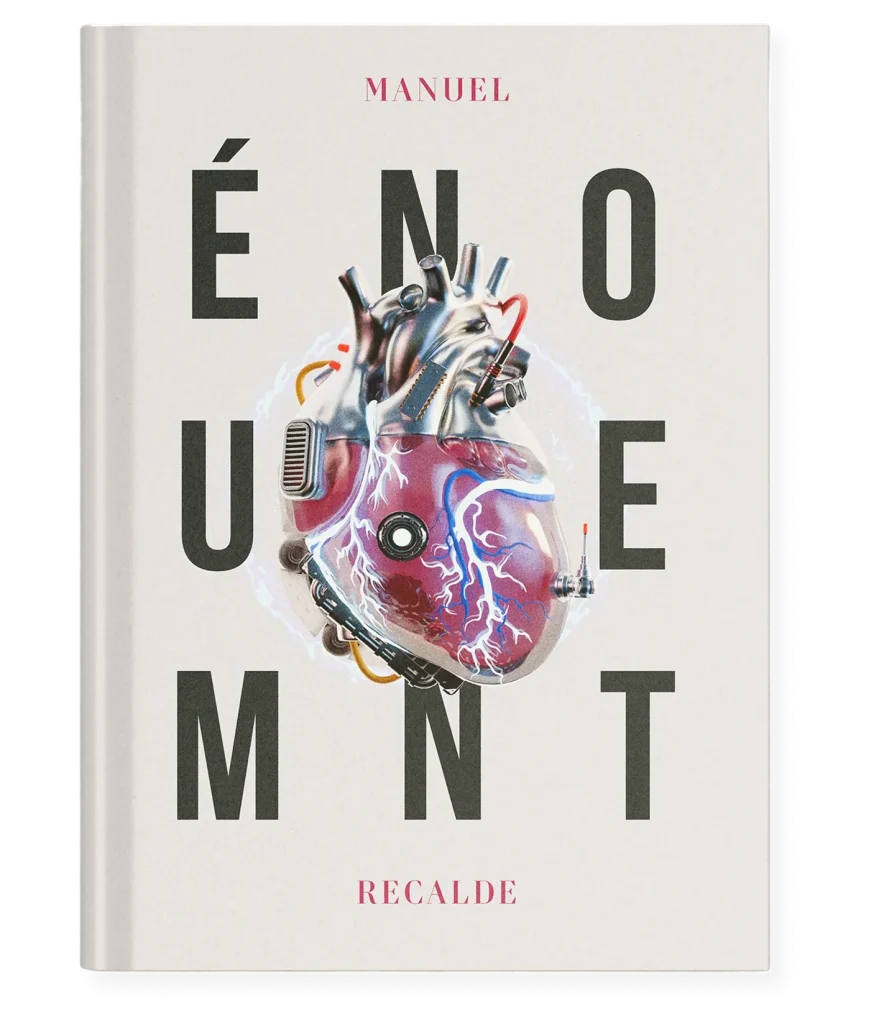
Enouement
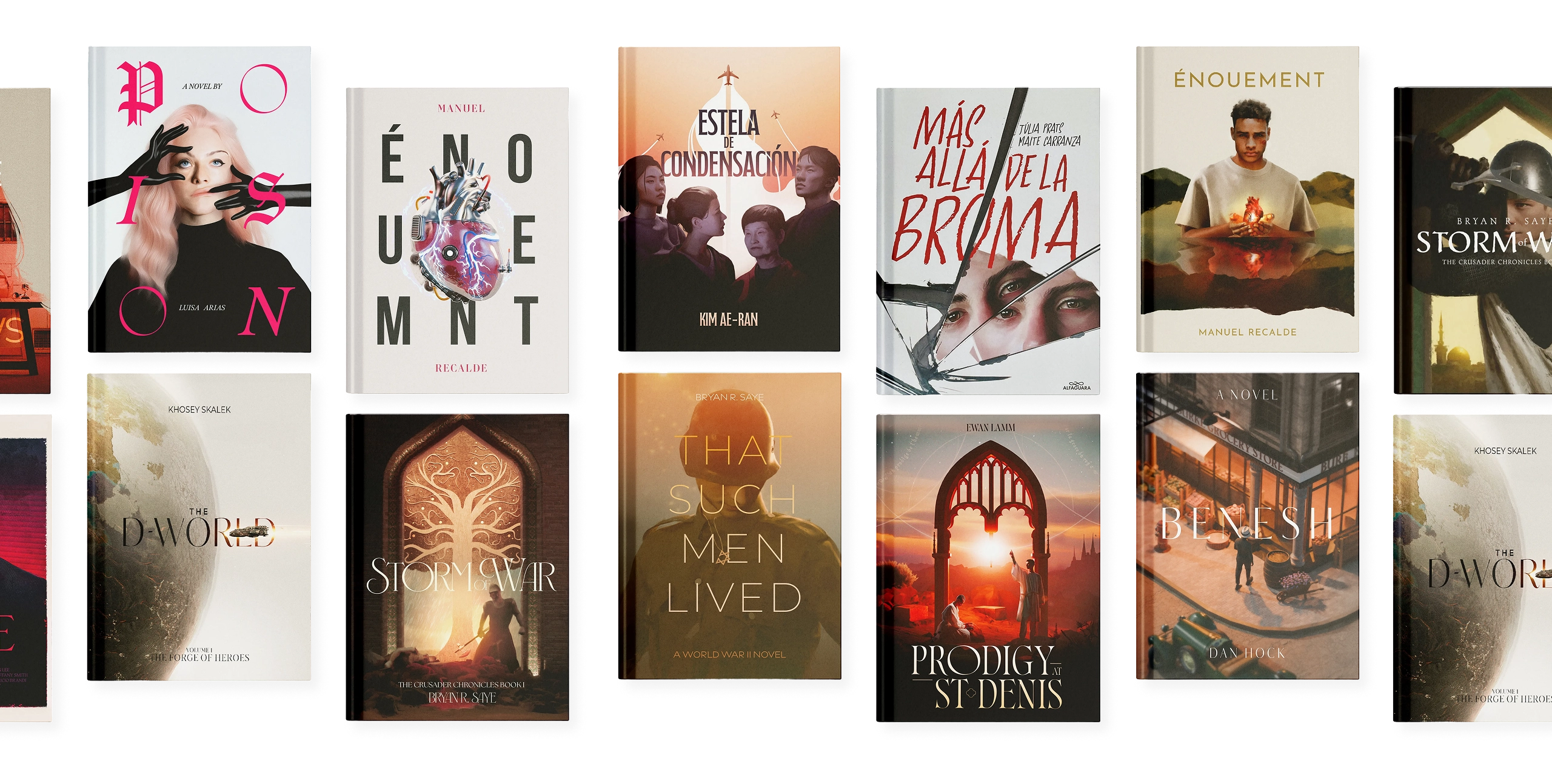
The cover artwork “Énouement” uses digital illustration on a minimalist background to focus all attention on an intervened anatomical heart. The organ appears in the foreground, suspended over white, pierced by wires, metal parts and electrical flashes that turn it into a living machine, halfway between the biological and the technological. The title letters, distributed in black columns around the illustration, construct a very clean graphic composition that allows the negative space to breathe.
The contrast between the intense pink of the heart, the neon glints, and the typographic sobriety conveys the idea of dissected emotions, reassembled memories, and feelings placed under a microscope. The cover suggests a story where the passage of time, memory, and second chances are experienced with an almost scientific, yet deeply human, intensity.
Enouement
In this version of “Énouement,” the cover art combines photography and digital illustration to depict a young person in the foreground, standing facing the viewer, holding a glowing heart of light between their hands. The figure is silhouetted against a landscape of hills and mountains in golden and greenish tones, while the lower section blends into a reddish reflection that transforms the ground into a liquid or dreamlike surface. The warm lighting on the face and heart emphasises a sense of intimate revelation.
The symmetrical composition, the serenity of the gesture, and the contrast between the natural environment and the almost mystical glow of the heart evoke a story of inner growth, grief, and acceptance of the past. The golden typography of the title and the author's name reinforce the lyrical and contemplative tone of the novel, as if each page were an emotional return to something that can no longer be changed.
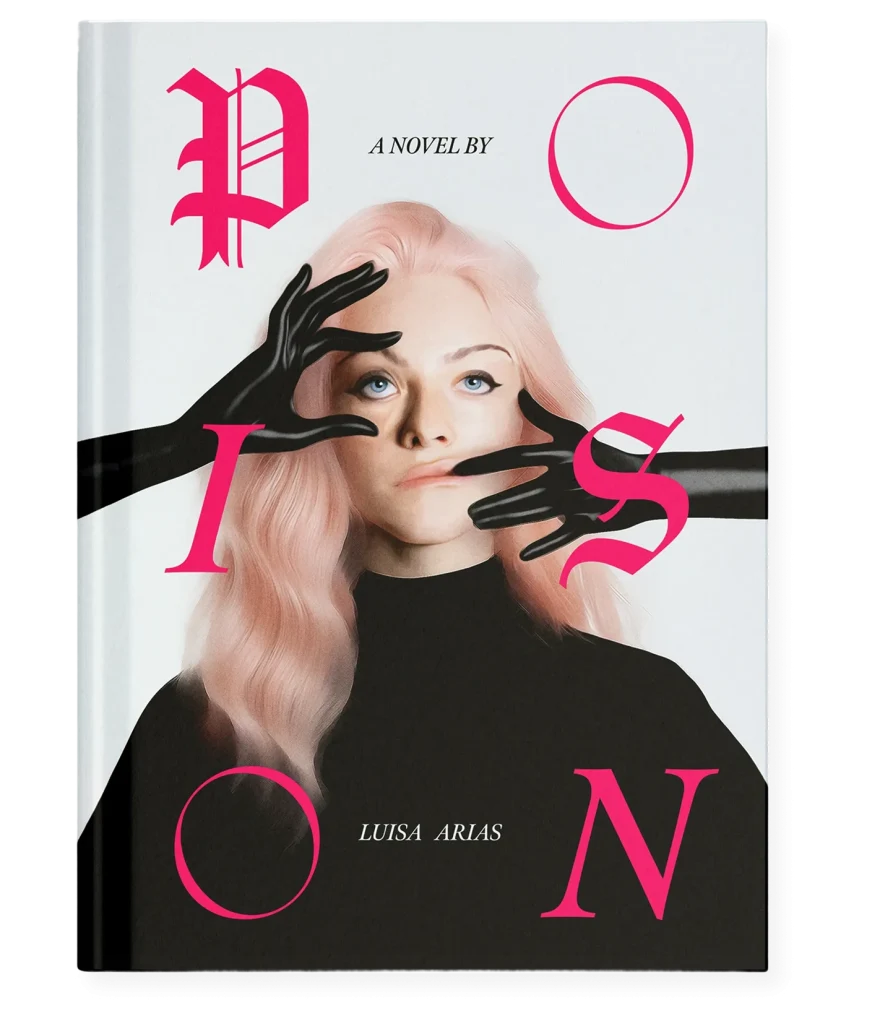
Poison
The “Poison” cover uses photography and digital illustration to create an elegant and unsettling image. Against a clean white background, a pale pink-haired young woman looks forward as two black-gloved hands reach towards her face, framing it as if intending to mould or possess her identity. The contrast between her dark clothing, the soft tone of her hair, and the sheen of the gloves generates visual tension between innocence and danger.
The typography of the title, in large fuchsia letters spread across the cover, lends a contemporary and almost pop feel, yet at the same time reinforces a sense of subtle threat. The ensemble suggests a story of emotional manipulation, toxic secrets, and relationships that appear beautiful on the outside but hide poison beneath the surface.
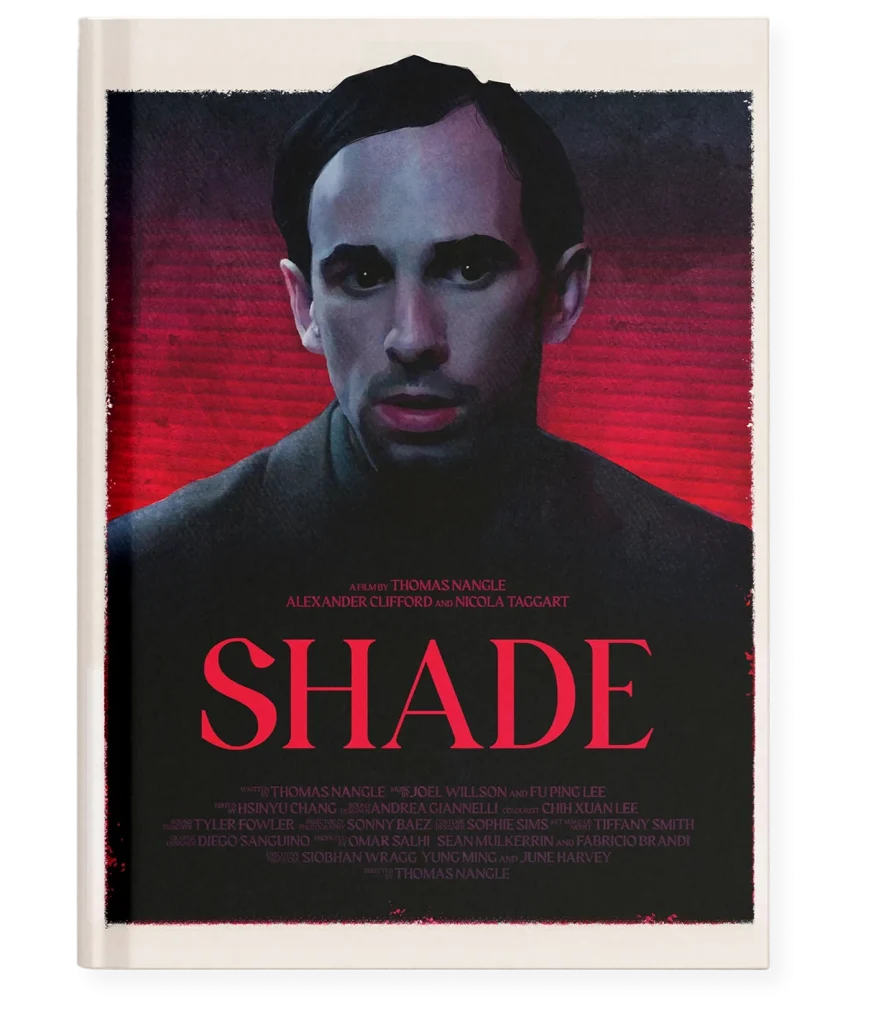
Shade
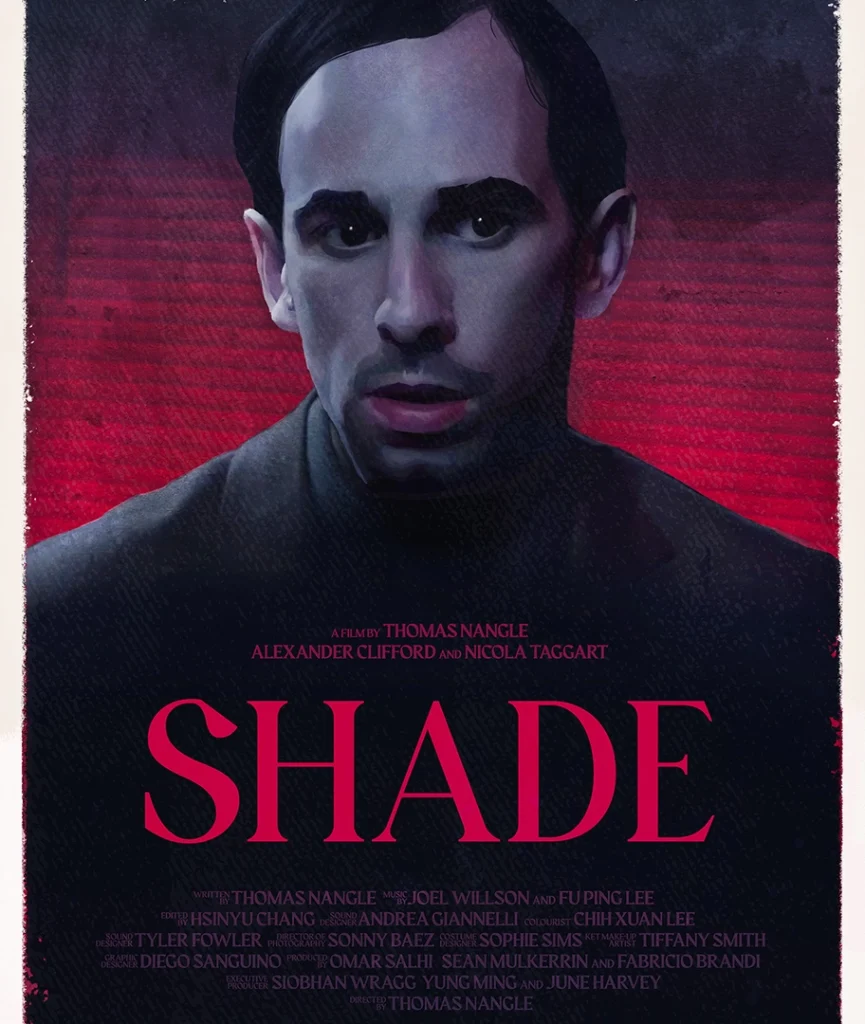
The cover “Shade” features a cinematic-style digital illustration centred on a frontal portrait of a man. His pale face, barely illuminated, stands out against a background of textured reds and magentas that appear to vibrate like an old screen or a theatre curtain. His serious expression and direct gaze at the viewer convey unease, secrecy, and a contained tension that invites one to wonder what this character is hiding.
The contrast between the reddish upper part and the darker lower section frames the figure as if caught between light and shadow. The large, intensely red title typography, which stands out against the background, reinforces the tone of a psychological thriller or crime drama and makes the face the epicentre of a story about identity, guilt, and moral grey areas.
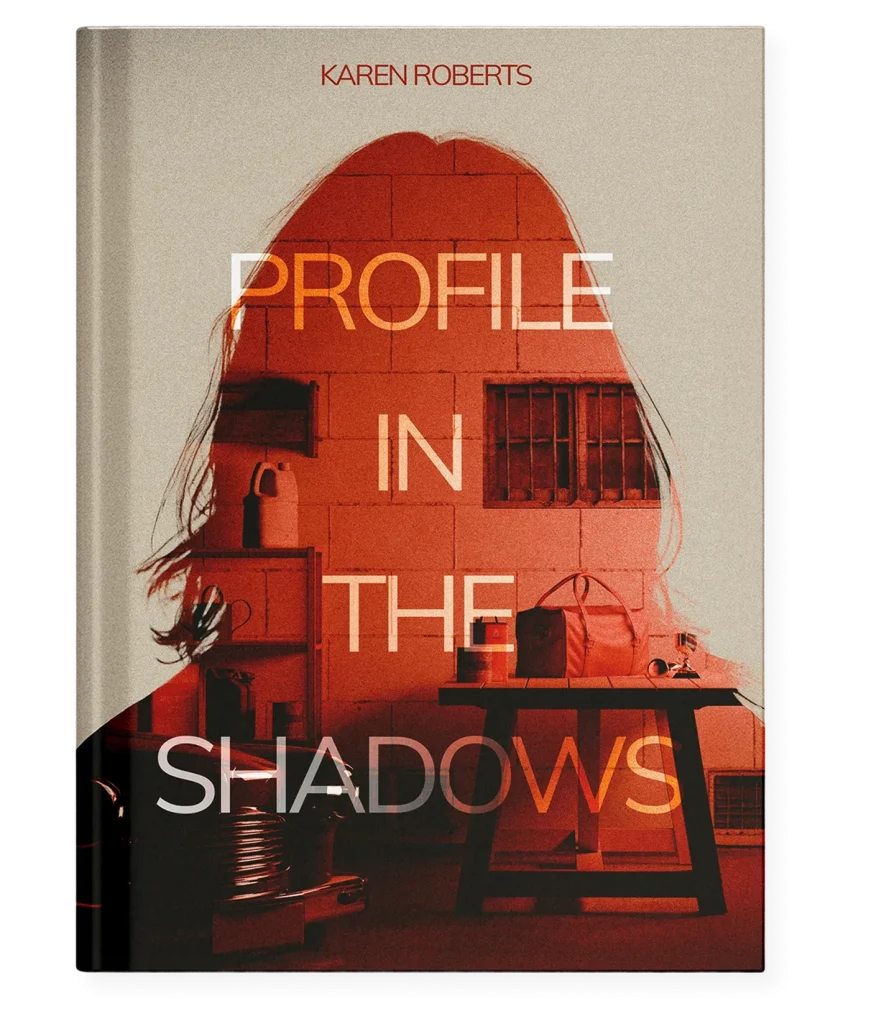
Profile in the Shadows
The cover “Profile in the Shadows” combines photography, set design and digital illustration to construct a psychological thriller image with a strong psychological charge. In orange and reddish tones, a bare room is seen with a table, chairs and metal shelves, lit by a harsh light reminiscent of an interrogation room or a prison cell. Overlaid on this scene is the silhouette of a woman in profile, almost ghostly, filling the cover like a projected shadow.
The dual reading between the physical space and the transparent figure suggests the protagonist is trapped in this location, whether as an investigator, a suspect, or a victim. The title typography, large and clear, integrates itself between the silhouette and the furniture, reinforcing the idea that the story delves into the mind and the dark corners of a case. The result is a cover that blends crime, suspense, and psychological analysis.
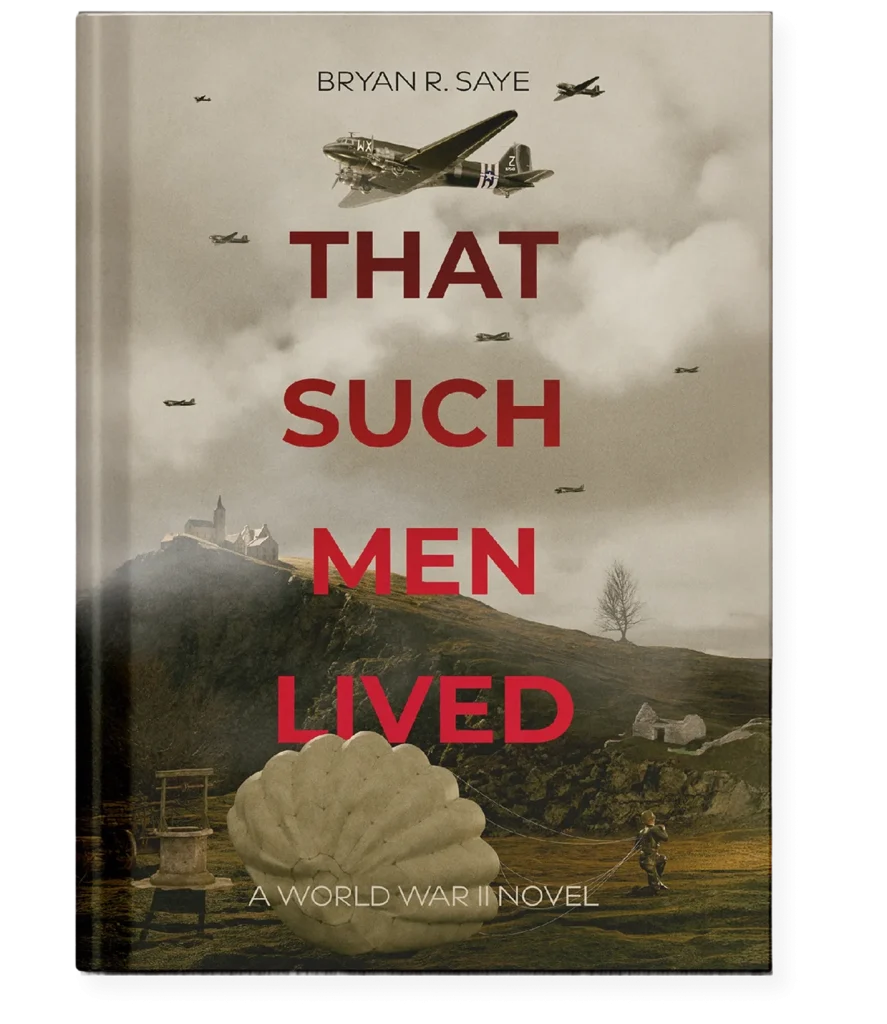
That Such Men Lived
This version of “That Such Men Lived” features a photographic-inspired war setting where the landscape becomes a stage for historical memory. In the foreground, a dirt path and a tiny figure advance towards a hill crowned with buildings, while a shell in the lower right corner introduces a symbol of travel, faith, or personal remembrance. Above the grey sky, a formation of military aircraft flies over the scene, making it clear that war permeates everything.
The desaturated palette of greens and greys, along with the fog that envelops the horizon, reinforces a sober and melancholic tone. The intense red title stands out strongly against the image, like a testimony that refuses to fade, and the composition as a whole conveys the idea that these lives and sacrifices deserve to be told.
That Such Men Lived
In this variation of “That Such Men Lived,” the cover focuses on the portrait of a soldier bathed in a golden light that seems to emanate from the past. The figure, in uniform, appears in profile, with their helmet silhouetted against a warm background that blends sunbursts and photographic grain, as if we were viewing a memory preserved on celluloid. Their contained expression and rigid posture suggest discipline, but also the silent weight of what has been experienced.
The tall, thin typography of the title is distributed vertically over the soldier's body, integrating into the image without obscuring his features. This minimalist and bright design, in contrast to the rawness of the subject matter, reinforces the idea that the novel views war through an intimate, human, and deeply emotional lens.
Benesh
The “Benesh” cover shows an urban scene rendered in 3D and digital illustration in front of a grocery store lit at dusk. In the foreground, a man with a hat stops in the middle of the street, his back to the reader, contemplating the shop window filled with carefully arranged fruits, boxes, and products. The warm light from inside spills onto the pavement and contrasts with the cooler tones of the street, creating a sense of both home and distance.
The details of the “Burke Grocery Store” sign, the awnings, the vintage car, and the flower pots place the story in a neighbourhood with a past, where every corner holds difficult decisions. The clean typography of the title, positioned in the centre of the cover, reinforces the focus on the character and their relationship with this place that seems to hold both the past and future of their life.
Benesh
In this version of “Benesh”, the cover plays with the contrast between black and white and colour to underscore memory and transformation. The facade of the “Burke Grocery” store is visually divided into two halves: one part in grey tones, almost photographic, evoking the past, and another bathed in a warm, golden light suggesting the present or a possible future. Between these two zones, the figure of a man and the open door act as a bridge between what is being left behind and what one is becoming.
The tall title typography looms over the shop sign, while the subtitle underscores themes of loss, identity, and overcoming. Together, they construct a cinematic cover that speaks of family roots, painful decisions, and the price of reinvention without forgetting who one is.
Rooster of fire
The “Rooster of Fire” cover opts for a digital illustration with strong symbolic force in a warm palette of reds and oranges. In the centre, the silhouette of a man holds a long spear topped with a flag, standing before a sea lit by the sunset's glow. The horizon fades into golden tones that could be either fire or mist, reinforcing the feeling of ritual, sacrifice, or call to action.
The white frame surrounding the scene and the small side symbols lend an almost contemporary tarot card or icon feel, where each element seems laden with meaning. The title's typography, rounded and elegant, sits at the bottom and dialogues with the curve of the cut-out, completing a composition that speaks of destiny, inner struggle, and rebirth through flames.
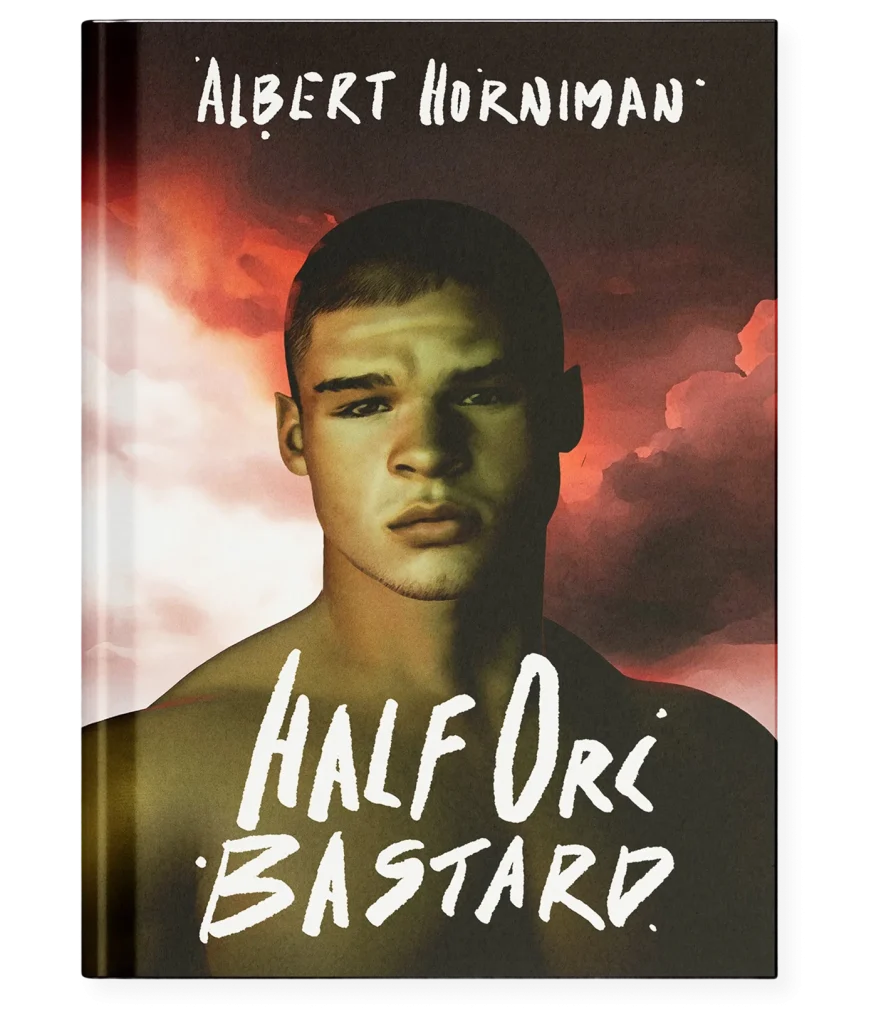
Half-Orc Bastard
The cover of “Half-Orc Bastard” features a dark fantasy digital illustration centred on a half-breed warrior in the foreground. His defiant gaze and tense stance, with his hand close to his weapon, make it clear that he has survived too many battles and grievances. The urban environment, lit by warm distant lights and neons, suggests a harsh and dangerous city where blood, honour, and vengeance mix on every corner.
The palette of metallic and reddish tones, along with the marked shadows on the protagonist's greenish skin, reinforce the feeling of inner conflict and divided origins. The bold typography of the title is integrated into the top and bottom of the cover, lending a raw and direct air that fits with a story of marginality, violence, and a destiny forged through hardship.
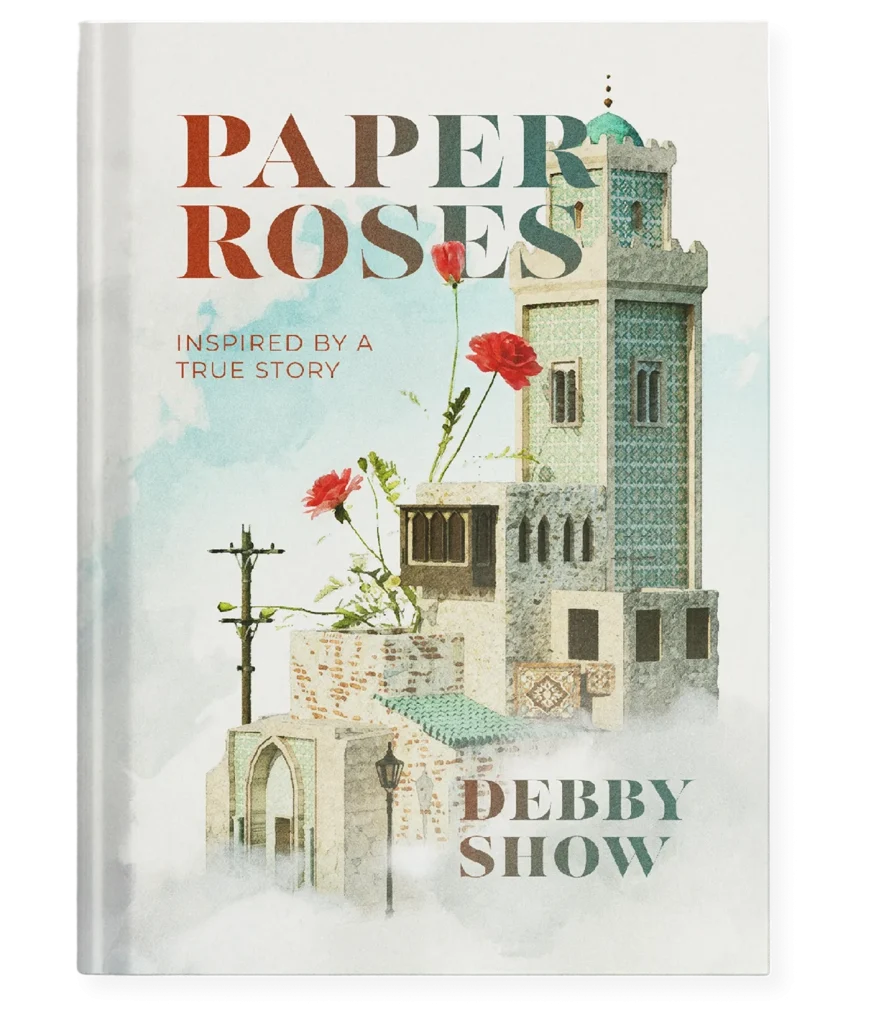
Paper Roses
The “Paper Roses” cover combines photography and digital illustration to construct a delicate and melancholic image around roses that appear as fragile as the paper that names them. The petals, slightly blurred or textured, evoke folded letters, memories kept in boxes, and promises worn away by time. The soft tones, between beiges, muted pinks, and creams, envelop the scene in an intimate and nostalgic light.
The title typography, elegant and editorially inspired, overlays the flowers without obscuring them, as if the words were another layer of memory. This balance between beauty and vulnerability suggests a novel about loves that are written, broken, and reassembled, where each paper rose holds a story that still burns within.
For Love I Will
The cover of “For Love I Will” uses subtle photography and digital illustration to build an emotional portrait in a contemporary style. In the foreground, a young boy looks away with an introspective expression, while a yellow rose rests against his chest, caught between his hands and the dark fabric of his t-shirt. Out-of-focus petals float above the figure, seemingly pausing in mid-air, as if freezing a moment of decision or an unexpressed confession.
The soft blue and mauve palette, combined with a slight blurring of the background, creates an intimate and almost dreamlike atmosphere. The large, elegant title typography is overlaid on the portrait without obscuring the face, reinforcing the idea that the story revolves around what a person is willing to do – and to risk – for love.
The Dreaming Dead
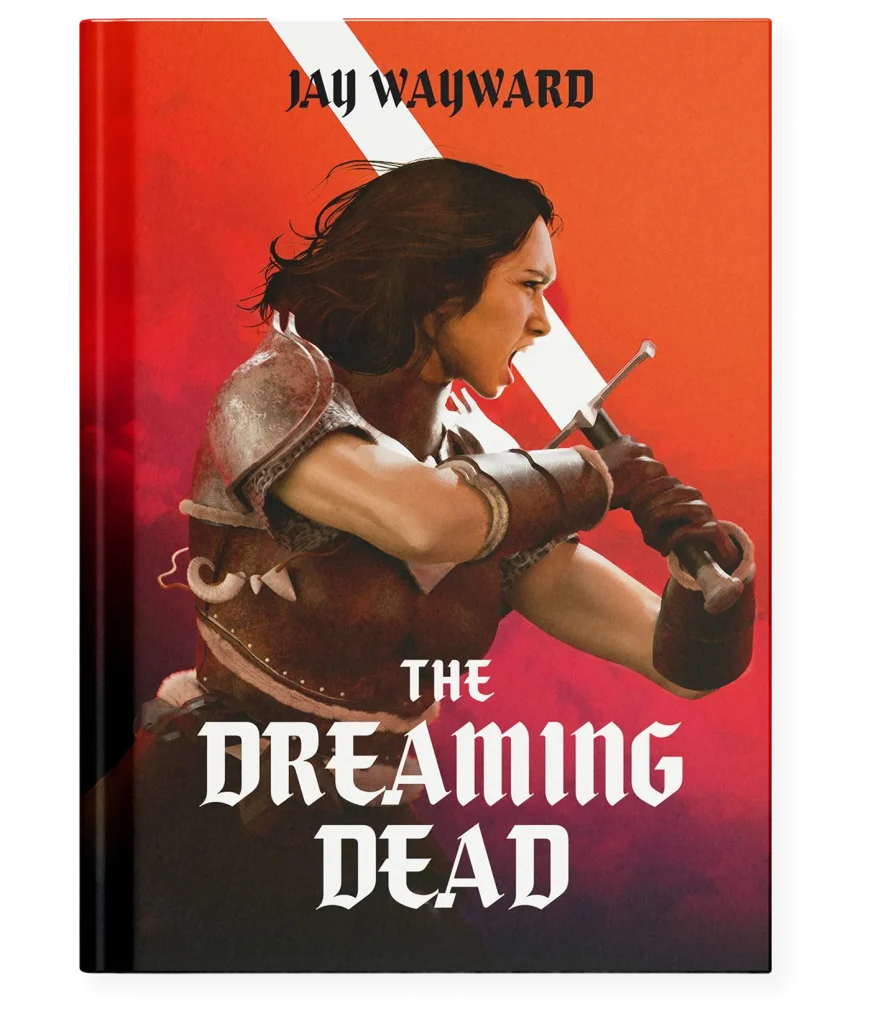
The cover of “The Dreaming Dead” features a realistic digital illustration focused on a warrior advancing in profile, her sword raised diagonally as she shouts in the heat of battle. Her metallic armour, leather straps, and tense posture convey strength and determination, as if she is crossing the line between life and death in a single gesture. The background in intense red tones, bisected by a light band reminiscent of a flash of light or a giant blade, envelops the scene in smoke and energy, reinforcing the sense of imminent danger.
The combination of volume, texture, and contrast between the dark figure and the background's glow creates a cinematic and dynamic image. The gothic-inspired title typography is integrated into the bottom of the cover, underscoring the dark and epic tone of the story, turning the cover into a promise of battles, sacrifice, and dark fantasy.
The Dreaming Dead
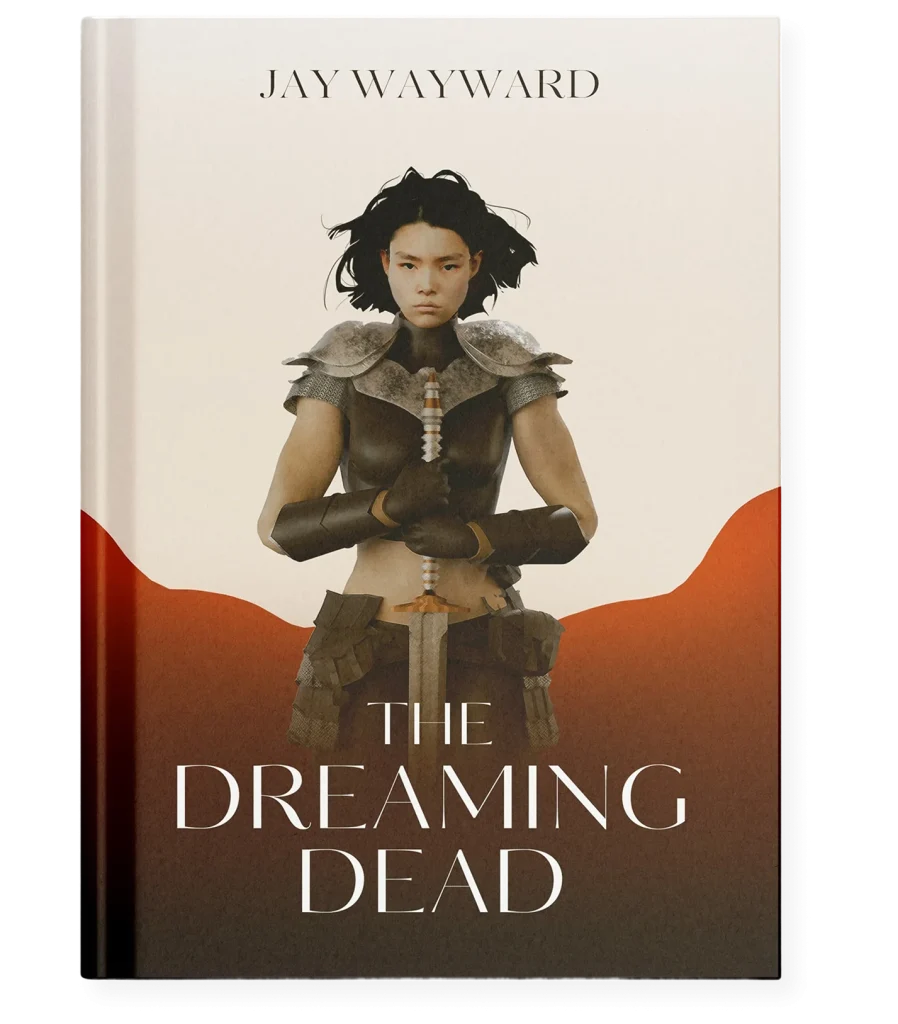
The cover of “The Dreaming Dead” uses photography and digital illustration to present a young warrior standing, looking forward with a firm and restrained expression. She wears light armour and holds a sword with both hands, resting it on the ground, in a pose that suggests readiness and vigilance rather than immediate action. The light background merges with a wave of reddish colour rising from the bottom, like a mist of sleep or blood slowly enveloping the protagonist.
The contrast between the serenity of the pose and the intensity of the red creates a silent tension that speaks of sacrifices, visions, and battles to come. The clean typography of the title integrates into the lower area, resting on the colour stripe, and reinforces the tone of introspective dark fantasy, where dreams, memory, and war intertwine.
Shades of Destiny: Revelations
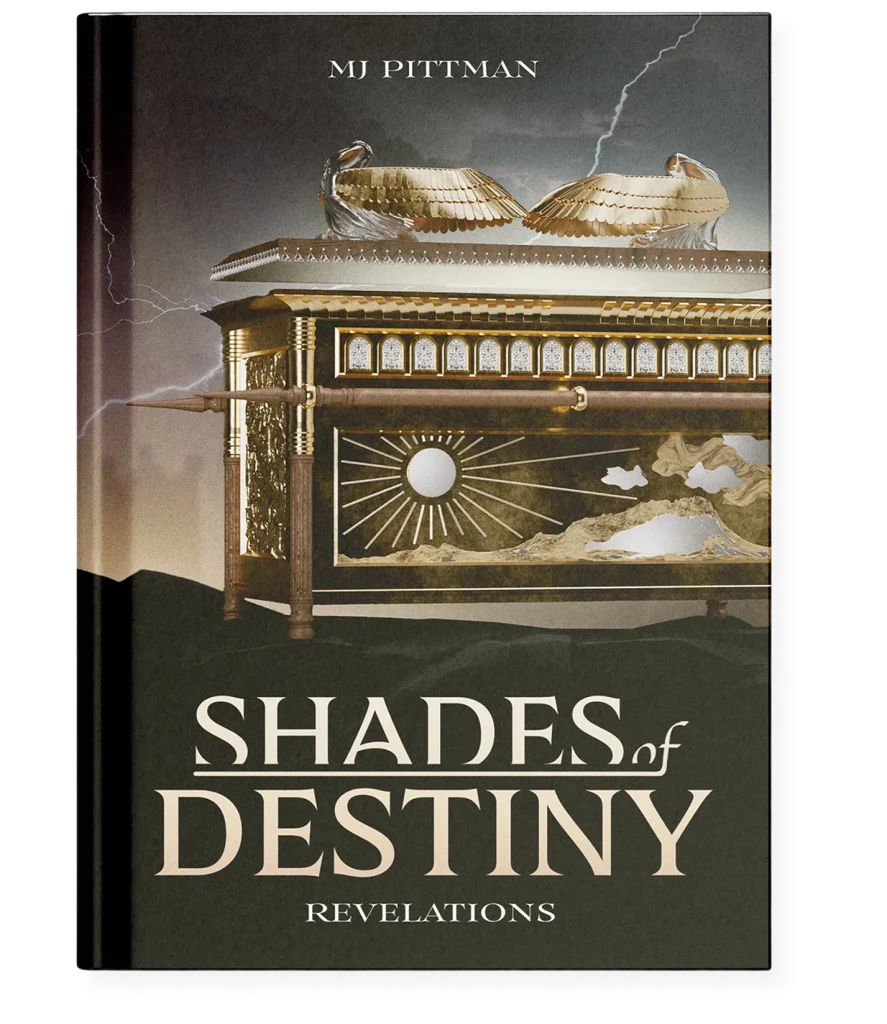
The cover for “Shades of Destiny: Revelations” combines 3D set design and digital illustration to highlight a golden ceremonial chest reminiscent of a sacred ark. The object rests on an ornate base, with reliefs, pillars, and metallic details that catch the light and showcase meticulous textured work and modelling. On the front, a circular motif with raised rays and clouds suggests the union between sky and earth, while the interior of the chest hints at sand, landscapes, or hidden symbols linked to destiny.
The dark background, streaked with subtle lightning, frames the gold of the chest and brings an atmosphere of revelation and supernatural danger. The title typography, solid and elegant, sits at the bottom with a classic style that reinforces the idea of ancient prophecies, buried secrets, and decisions that can alter the course of history.

Shadows of the Soul
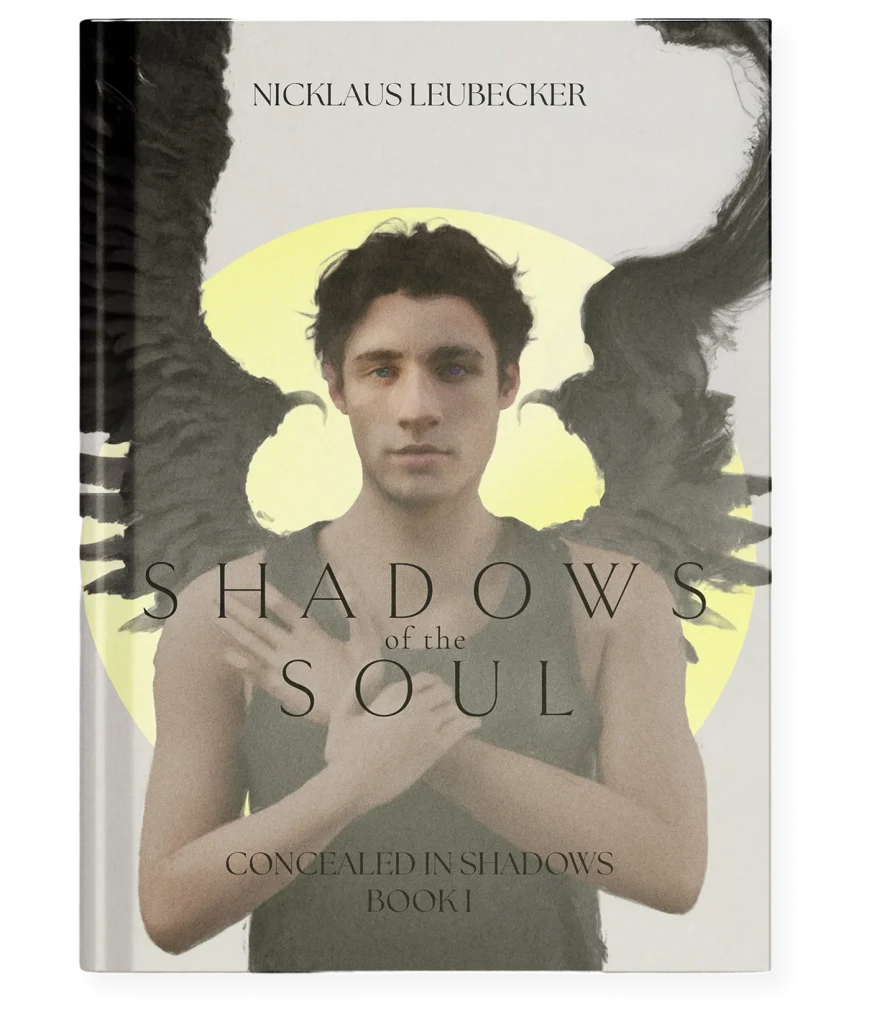
The cover for “Shadows of the Soul” combines photography and digital illustration to create an intimate and enigmatic image. In the foreground, a young man looks at the viewer with his arms crossed over his chest, while dark wings blur like smoke behind him. A large yellow circle acts as a halo, silhouetting him and providing contrast against a soft palette of greys and beiges.
The texture of the skin, clothing and shadows reinforces the realism, while the ethereal treatment of the wings suggests an inner conflict between light and dark. The clean typography of the title blends with the character's body without detracting from their prominence, completing a cover that speaks of identity, secrets and emotional struggle.
Prodigy at St. Denis
The cover “Prodigy at St. Denis” combines 3D set design and digital illustration to recreate a historical fantasy scene at sunset. A large red Gothic arch is silhouetted against the golden sky, while beneath it, a young man kneels among the ruins and another figure raises their hand towards a descending light, as if receiving a revelation.
The warm palette of reds and oranges, the play of light and the suspended dust create a cinematic atmosphere that blends devotion and mystery. The details of rocks, robes and Gothic architecture bring realism, while the elegant typography of the title reinforces the epic nature of the story.
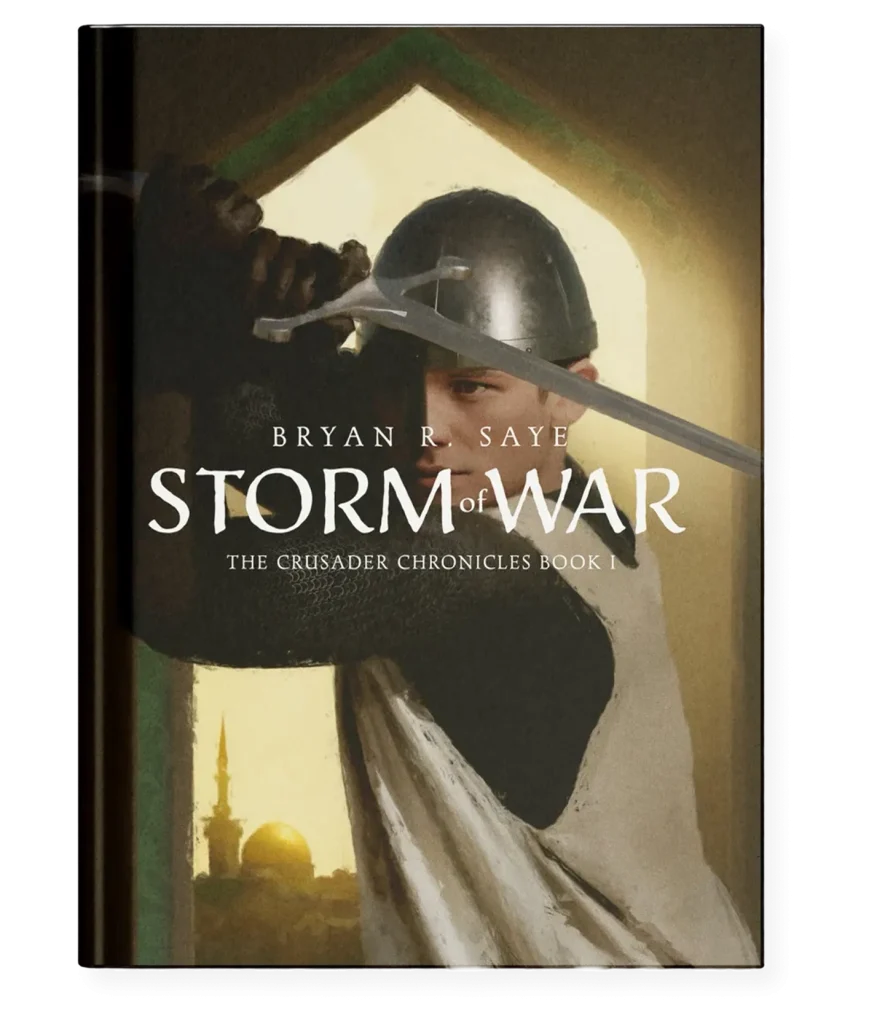
Storm of War
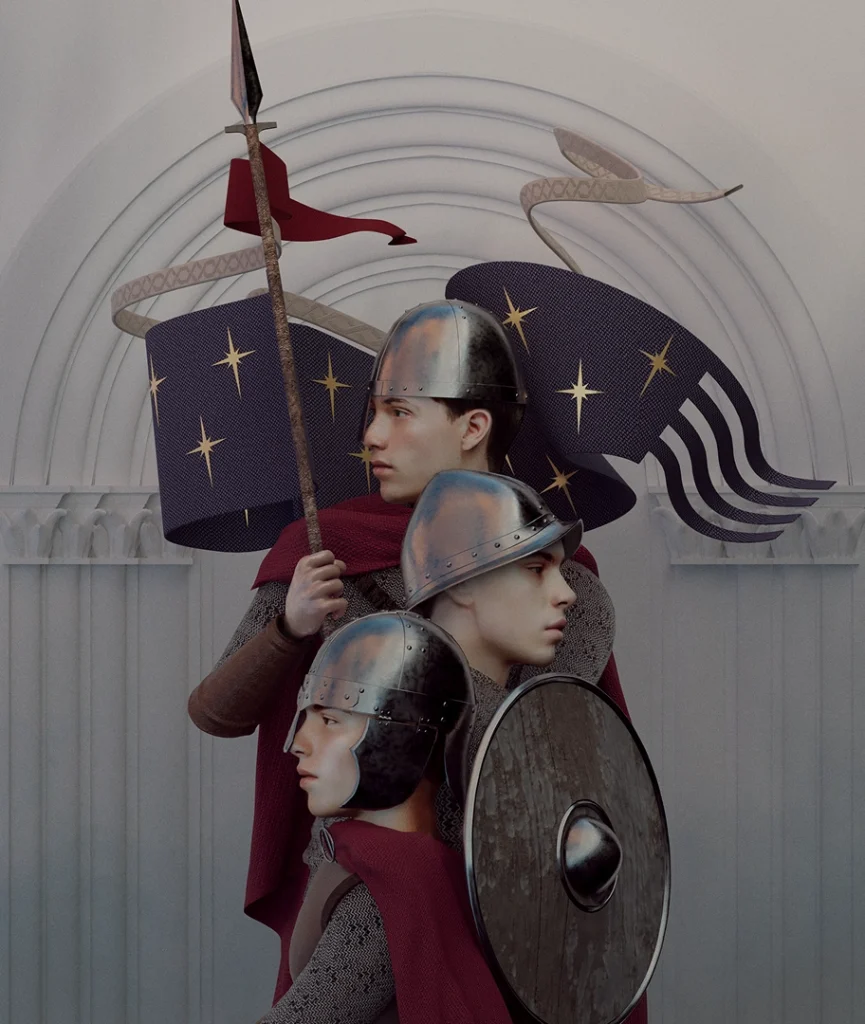
The cover for “Storm of War” features a painterly digital illustration centred on a crusader knight raising his sword to face height, as if swearing allegiance before battle. Golden light entering through a large stone archway frames his silhouette and allows a city bathed in sunset to be seen in the background, hinting at the territory he must protect.
The dark armour, worn fabrics, and metallic reflections convey tension and sacrifice, while the architectural setting suggests a historical chronicle of faith and war. The title typography, sober and elegant, reinforces the epic tone of the saga and guides the eye towards the protagonist, creating an immersive cover that balances realism, drama, and a cinematic atmosphere.
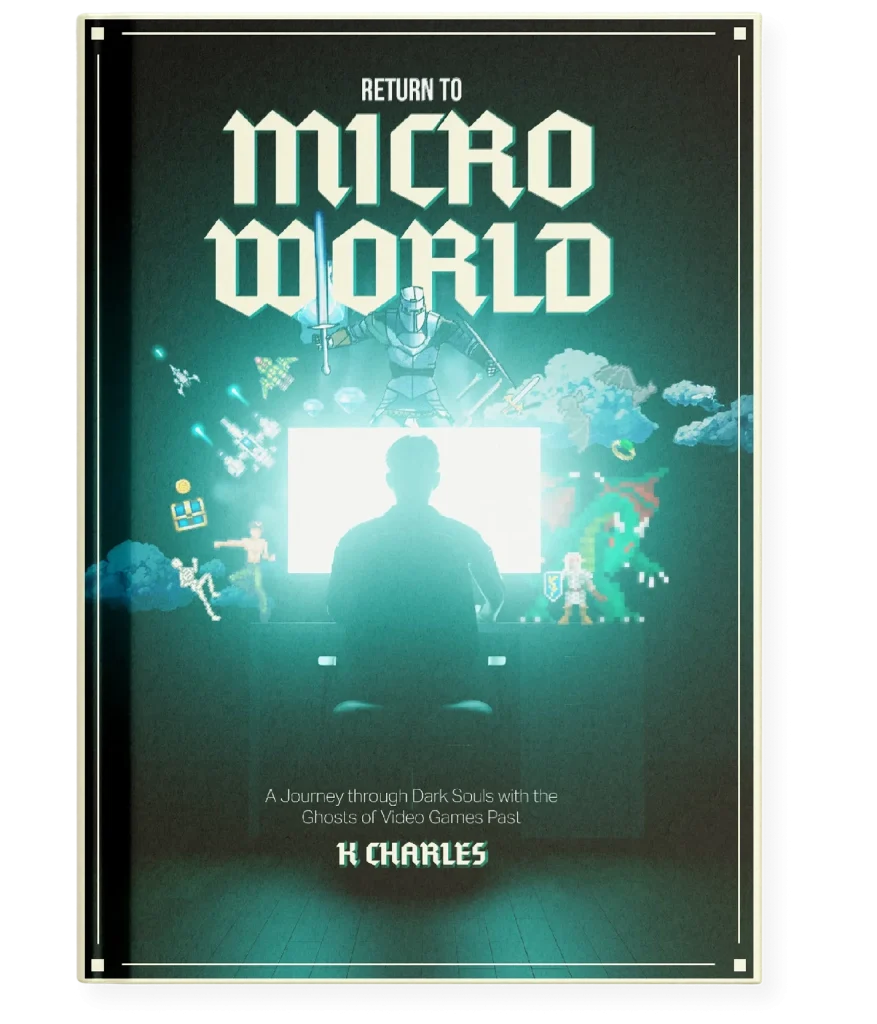
Return to Micro World
The “Return to Micro World” cover uses digital illustration to show the silhouette of a gamer sitting in front of a bright screen that floods the scene with cyan light. Pixel art characters and elements float around the monitor, alongside the figure of a knight and luminous flashes that seem to escape the video game into the room, blending reality and the digital world. The contrast between the dark background and the glow of the screen creates an atmosphere of total immersion.
The palette of neon greens and blues, along with the retro-inspired typography, are reminiscent of classic arcades and early fantasy video games. The overall effect conveys the idea of a nostalgic journey “back” to the worlds that shaped the gamer, blending homage to video game history with an almost emotional and contemplative tone.
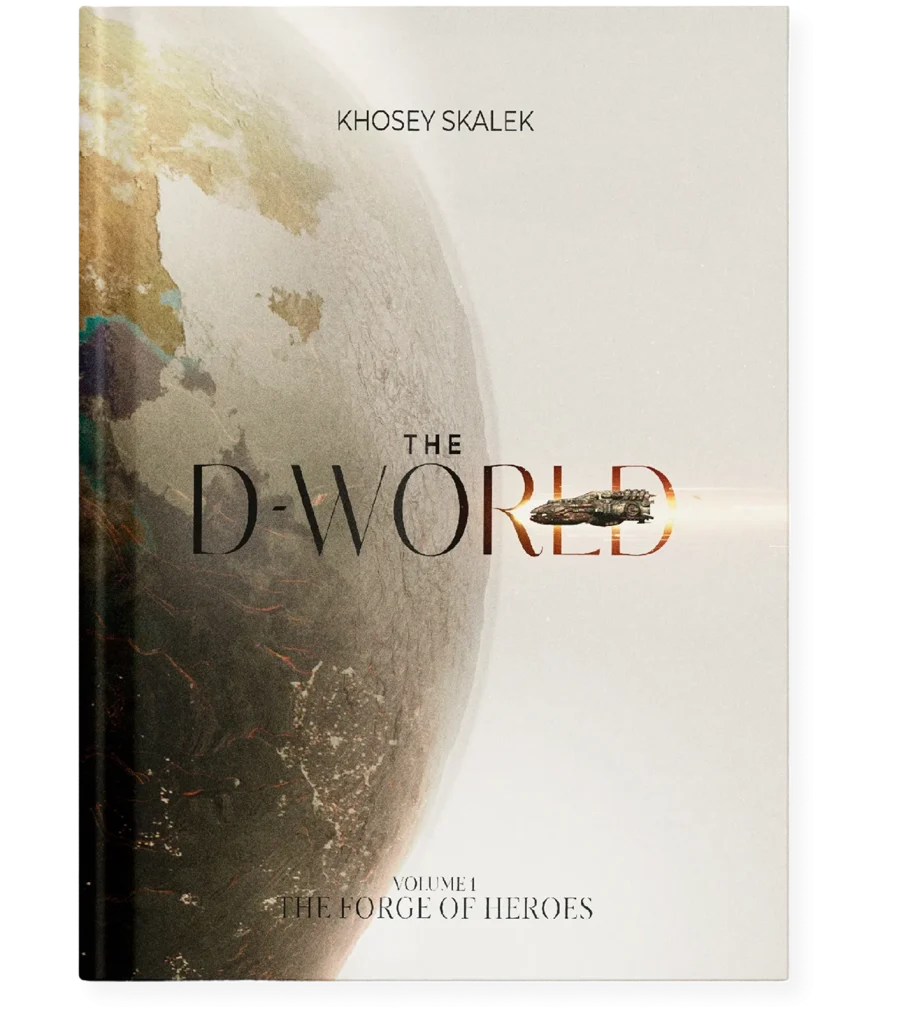
The D-World
The cover “The D-World” features a minimalist composition sci-fi digital illustration. On the left, a gigantic planet occupies a good part of the cover, with cracked continents, illuminated zones and a halo of light marking the border between day and night. Crossing the centre, a spaceship advances horizontally leaving an orange trail that cuts through the title, hinting at a decisive journey into the unknown.
The light, almost empty background, in contrast to the dark mass of the planet, reinforces the feeling of cosmic silence and colossal scale. The elegant, clean typography of the title integrates into the central axis and conveys the tone of an epic space opera, where heroes are forged in a vast and dangerous universe.
Beyond the joke
The cover, “Beyond the Joke,” uses digital illustration and photomontage to create an unsettling image around a girl's fragmented face. Pieces of broken glass spread across the cover, dividing her gaze into multiple reflections that suggest a shattered identity, secrets, and unexpected consequences. The title, written in a large, gestural, red typeface, cuts across the composition like a cry that can no longer be taken back.
The contrast between the white background, the texture of the glass, and the shadows around the eyes generates an atmosphere of a young adult psychological thriller, where what appeared as a game leaves real scars. The authors“ names are discreetly integrated at the top, while the overall design maintains focus on the emotional impact of the face and the danger hidden ”beyond" the laughter.
Contrail
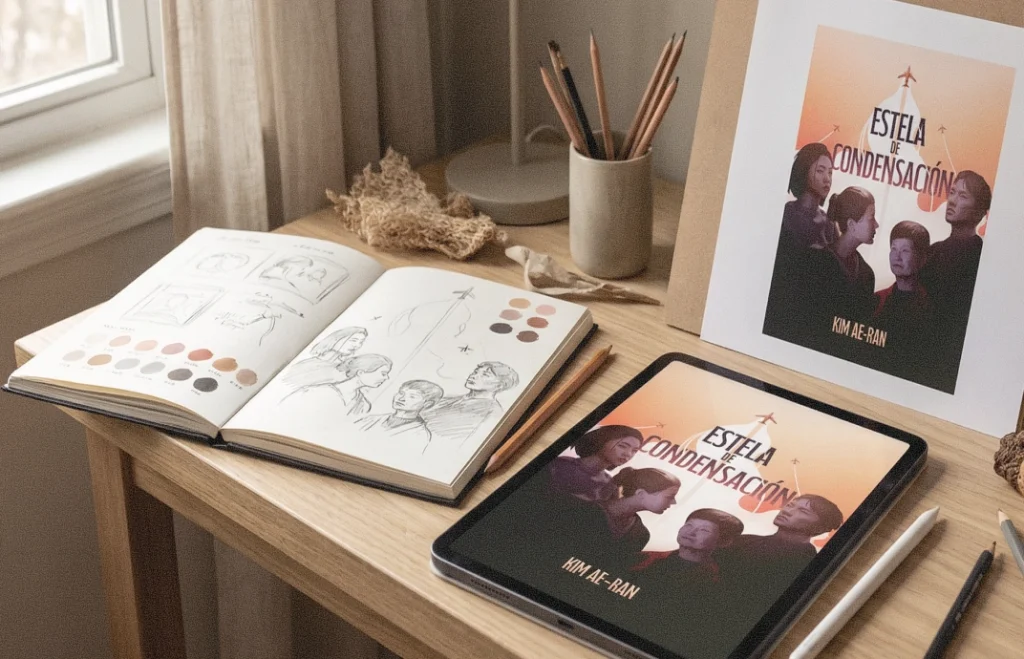
The cover “Contrail” combines digital illustration and photographic composition to intertwine an intimate story and a wartime context. At the top, several aircraft leave long white contrails that fan out across an orange sky. Below them, four characters look in different directions: a young woman in profile, another from behind, a boy, and an older woman, all illuminated by the same warm light that tints the horizon.
The arrangement of the faces, aligned yet emotionally distant, suggests an ensemble plot where generations and experiences intersect under the shadow of war or social conflict. The vertical typography of the title is integrated into the centre, like a column of smoke cutting through the scene, and the overall composition conveys a story about memory, invisible wounds, and the mark that collective events leave on everyday life.
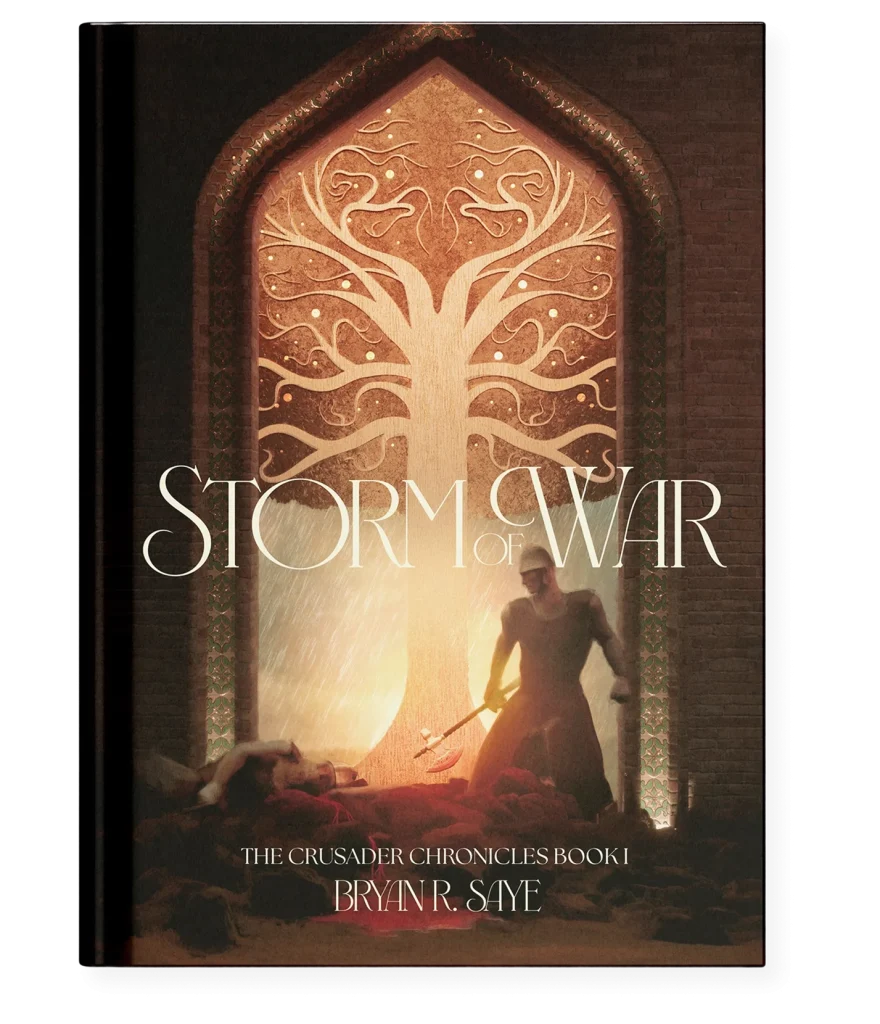
Storm of War
The “Storm of War” cover combines 3D scenery and digital illustration to construct an epic fantasy scene with a strong symbolic component. In the centre, a large arched window is filled with a golden light tree, its branches expanding like luminous filigree against an ornamental background, bathing the entire space in a warm and almost sacred glow.
At the foot of the tree, a lone warrior advances between fallen bodies, silhouetted by the glow as he brandishes his sword, suggesting the clash between faith, violence and destiny. The palette of ochres and golds, the suspended particles and the volumetric treatment of light reinforce the cinematic atmosphere, while the elegant typography of the title guides the gaze towards the central axis and provides a finish of historical and legendary saga.
Herdzibah and the Dragon
The cover for “Herhzibah and the Dragon” combines 3D set design in Blender and digital illustration in Photoshop to create a historical and evocative image. In the centre, a hand holds an old photograph surrounded by floating documents, illuminated by a warm light that adds depth and mystery.

The title, with an elegant and fantastical typography, reinforces the mythical tone of the work. The composition blends technical precision and artistic expression, achieving an immersive cover that connects history, identity, and visual emotion.
Bespoke fantasy book cover illustrations for your world
In every fantasy project, I interpret the tone, setting, and magic system to create fantasy book covers that instantly connect with your ideal reader. From the brief, I translate key characters, settings, and symbols into book cover illustrations with composition, colour, and typography considered for both physical bookshops and digital platforms, ensuring your story stands out from other fantasy book covers and is recognisable at a glance.
Science fiction cover design for technology and space stories
I approach every science fiction book cover commission as an opportunity to condense the tone of your universe into a single image: from space opera to intimate dystopias. Based on your brief, I define the concept, composition, and palette for book cover illustrations that work just as well in large format as they do in miniature, and that differentiate your work among other science fiction book covers, while always maintaining a clear and memorable visual identity.
More of my illustrations
Editorial clients
+50
Independent authors whose book covers I have brought to life
Get in touch and tell me your proposal!
Trust, process and results